Broadcaster
Speaker, body state, conscious intent, subconscious intent, emotional load.
 Label RelativityHuman Signal Intelligence
Signal model
A simple telecom translation of human communication: one person broadcasts, another receives, and distortion enters before meaning becomes conscious.
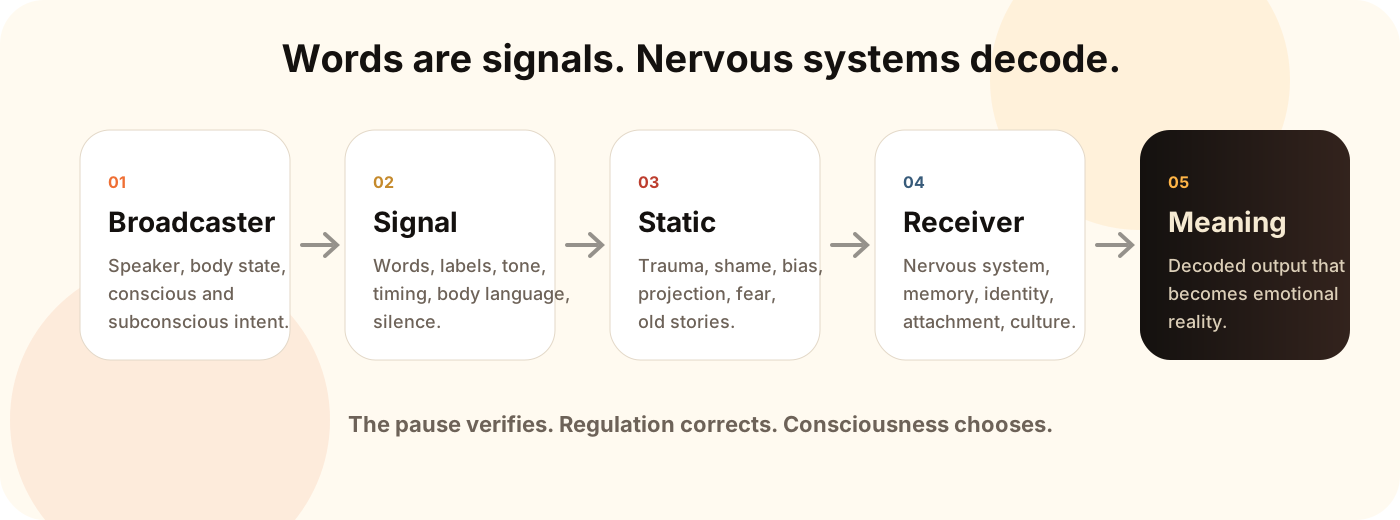
Translation layer
Most people think communication means transferring words. It actually means attempting to transfer meaning through unstable channels between imperfectly regulated nervous systems.
Speaker, body state, conscious intent, subconscious intent, emotional load.
Words, labels, sentence structure, direct statements, omissions, silence.
Tone, timing, volume, pace, facial expression, posture, warmth, coldness.
Trust, relationship history, power imbalance, current stress, digital or in-person context.
Trauma, shame, fear, bias, projection, fatigue, identity threat, family scripts.
Nervous system, memory, attachment pattern, self-worth, culture, regulation capacity.
The emotional reality the listener experiences after interpretation.
The reaction that becomes the next signal: clarify, attack, defend, withdraw, repair, or connect.
Three failure points
The sender uses words to hide punishment, control, contempt, insecurity, avoidance, or manipulation.
Trust is already damaged, so even neutral messages pass through relational static.
The listener decodes old pain into the present signal and mistakes the output for objective reality.
Broken telephone across time
A child hears, "You are too much." The body installs, "My needs are unsafe." Twenty years later, someone says, "Can you lower your voice?" The adult hears the wound, not only the sentence.
That is trauma decoding. The present signal gets routed through old emotional memory.
Clean communication protocol
Do not immediately rebroadcast from threat.
Ask what was actually said.
Ask what your system made it mean.
Ask whether that was sent or decoded.
Name tone, timing, or delivery without attacking.
Try again with cleaner words, tone, and timing.